The serve is one of the most important shots in doubles – and it often decides the rally within seconds.
We analysed 100+ hours of doubles matches and found that for both intermediate and professional players: an average of 40% of rallies are over within the first 4 shots!
So no matter what level of badminton player you are, having a good serving strategy helps you gain advantage at the start of the rally or win quick points.Â
Here are the 5 best serves to play in doubles:
Before we break down exactly how to use each one, you need to make sure you are in the correct positioning 👇
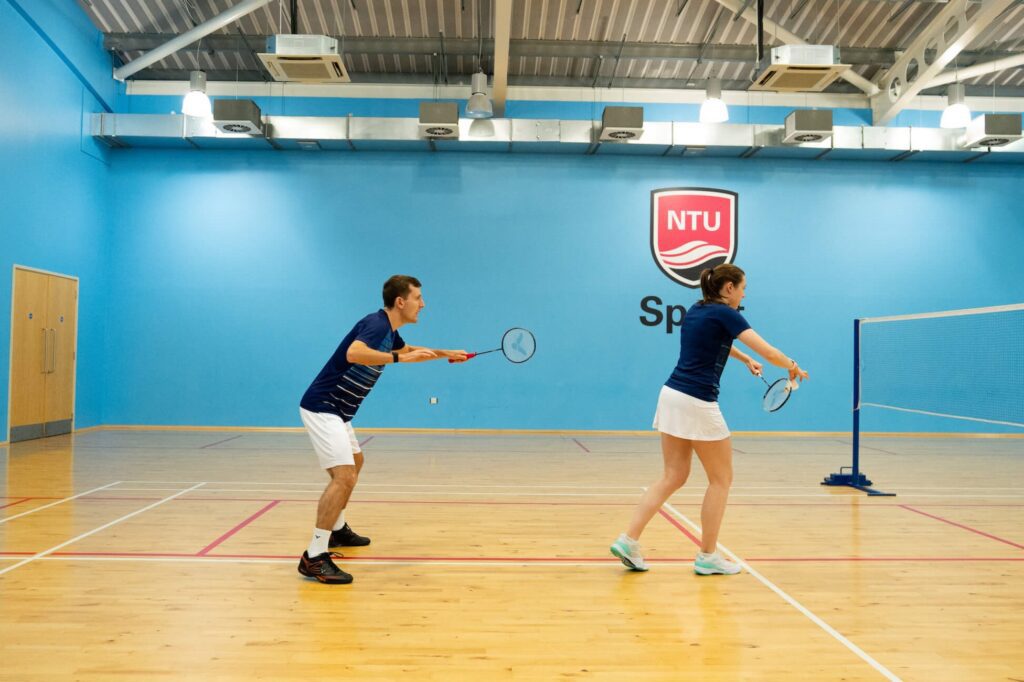
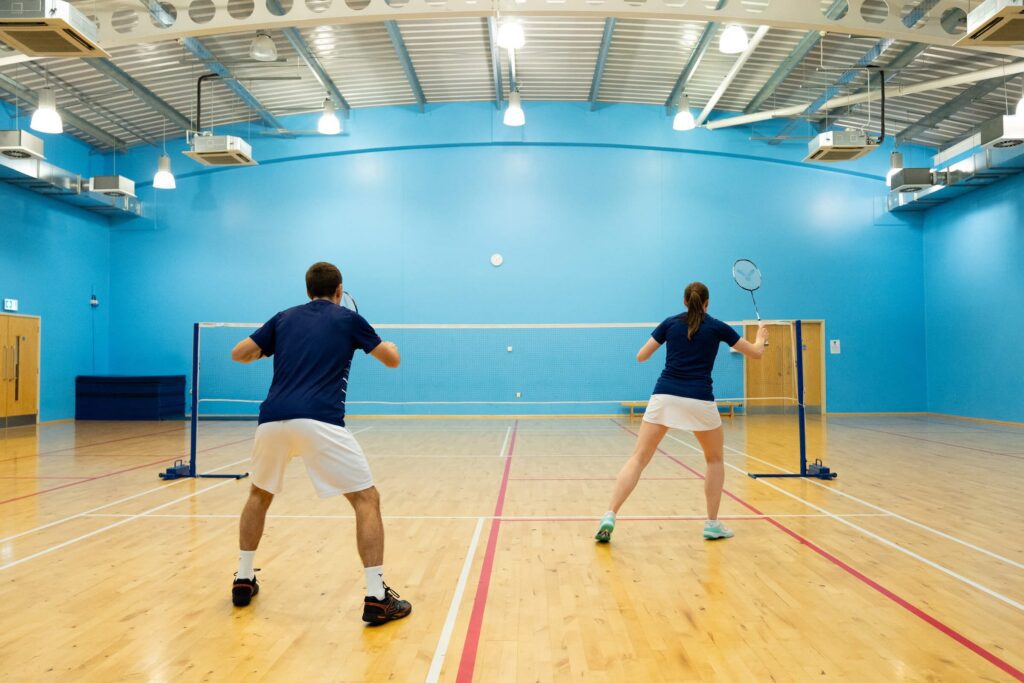
When serving in doubles you should be stood close to the service line, as well as close to the centre line from whichever side you are serving from.
But make sure that you are not stood on any lines – as this is a fault!Â
As the non-server, you should be stood around 2 racket lengths behind the server, usually in the centre of the court. This is a good position as you can reach both sides of the mid court and rear court.
However, if you struggle to get returns to either side (e.g. your backhand side), then you might move half a step further over in this direction to help you cover that shot!
Bonus Resource: If you are struggling to reach a return of serve to your backhand when your partner is serving then you might want to check out the article here for more tips.
You can also move over towards one side if your partner is really tall and you struggle to see over them.Â
💡 It’s really important to get your set-up and positioning right as it could be the difference between hitting the third shot early and not getting it at all!
Which side is best to move to will depend on where your partner serves to, so we’ll now go through some scenarios of where you should serve to and what you should both do after this!
From a simple serve to the T, this is what commonly happens:
As a bonus tip, these returns are likely to go cross-court too as that follows the natural swing of their racket.
How To Execute:
Of course this ‘common’ situation will depend on 2 things:
đź’ˇ Hitting a winner on the third shot not only frustrates your opponents but it's also a great feeling and it can win you many points!
You can also try serving to your opponent’s body.
The exact placement to the body will determine their most likely reply. Ideally you want to ‘tempt’ them into hitting on your forehand side, which is usually the more comfortable side to intercept from!
How To Execute:
What should your partner do?
Taking it to the next level:
How To Execute:
Why This Works:
However: This set play only really works if you’re fast enough to serve from the T and then move over in time.
If you’re not fast enough to cover the straight, you can still serve out wide… But instead, let your partner move to cover the straight tramline instead and you can then take half a step back and cover the middle and cross-court.
đź’ˇ Adding variety into your serves makes your opponent uncomfortable as they can't get into a rhythm, and it can often either force a weak reply or even a mistake!
A lot of people don’t think about serving low out wide to the tramline because it might look obvious to their opponents that they’re going to do this.
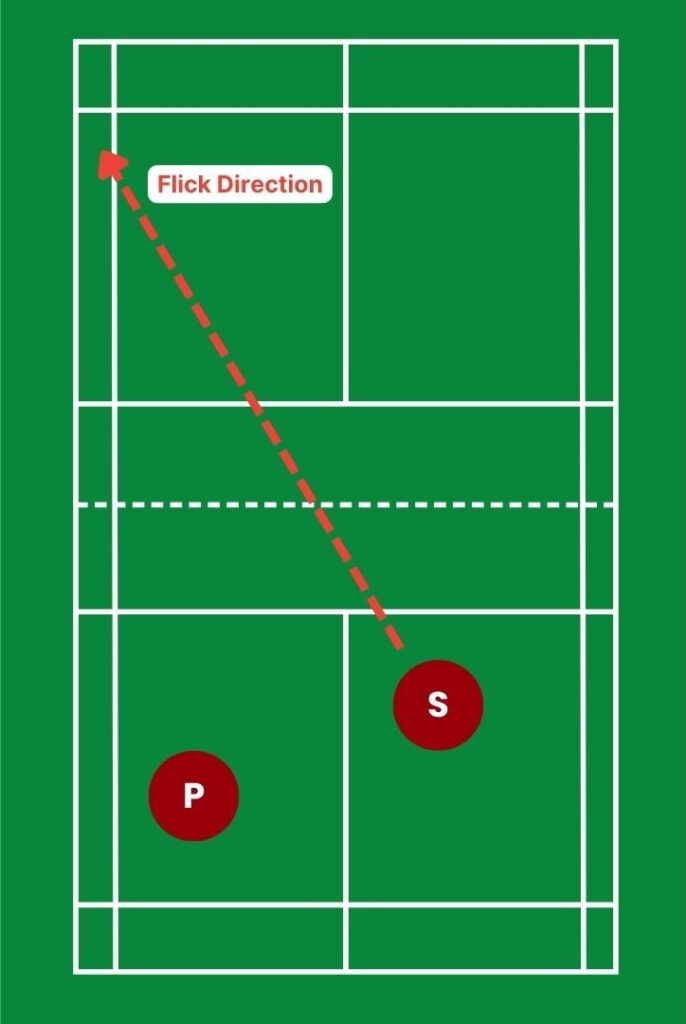
But you can actually also play a flick serve out wide with a very similar technique to almost deceive your opponents!
It’s important to have the mindset that a flick serve is an attacking shot so you want to be in a good position to counter attack after the serve.Â
The best option after flicking out wide is to move back on the same side you flicked from so you’re covering the cross court shot, allowing you more time to react to the return. Since your partner is behind you, they’ll have more time and will be better at reacting to the straight shot.
How To Execute:
You should move back on the same side you flicked from so you’re covering the cross court shot, allowing you more time to react to the return.
Since your partner is behind you, they’ll have more time and will be better at reacting to the straight shot.
Your exact positioning can also change depending on how good your flick serve is:
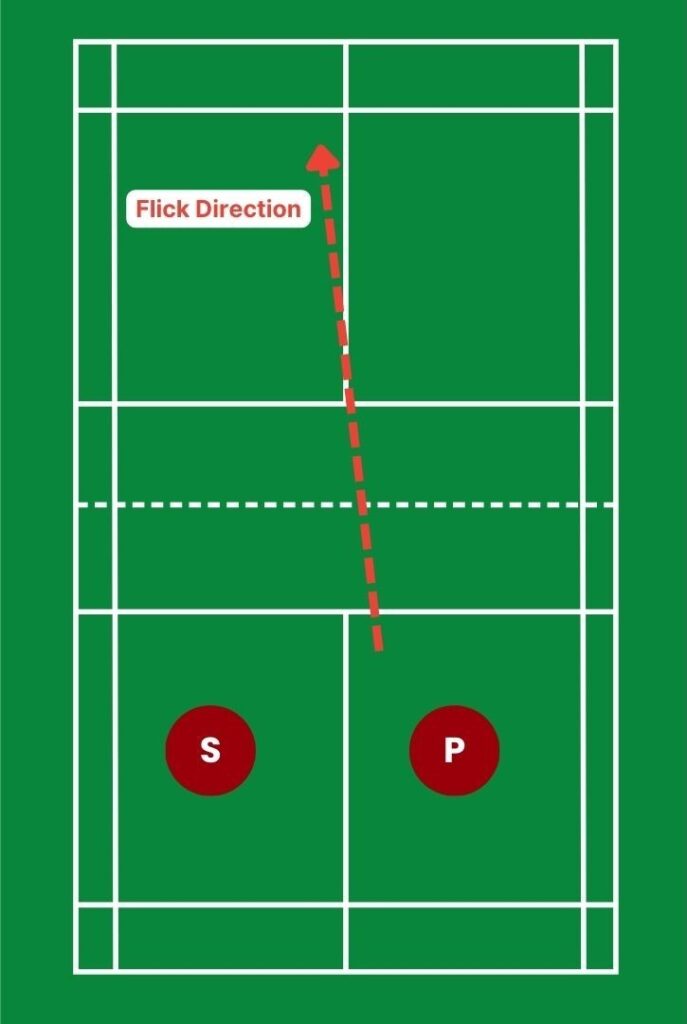
This can be used very effectively from both sides!
How To Execute:
In general, you would move back to the same side you’ve served from, similar to the flick out wide.Â
However:
Good shots to play on the 3rd shot are:
💡 This set play won’t work well if your serve isn’t good and they’re not off balance! A flick that’s too flat doesn’t move your opponent enough... And a flick that’s too high gives them too much time to get behind the shuttle and play a smash straight at you!
We’d really recommend communicating with your partner where you’re serving to and what you’ll be looking for.
âś… Practical Tips:
Doing this will help you use different serving strategies into your game.
It might feel weird at first but it hugely improves your organisation so that you’re both not looking for the same shot!
Note: You might watch some professional players play and notice that they sometimes don’t do this, but don’t forget they’ve likely trained for hundreds of hours with their partner so will have a good idea what each of them are doing. They will also be better at knowing what the likely replies are going to be and will be able to adjust accordingly!
Now that you know these doubles serve strategies, you need to be able to move to the 3rd shot quickly and effectively so that you don’t undo all of your good work!Â
So, to learn how to move faster and more efficiently on-court, check out The Footwork Accelerator here.
Or, if you’d like to check out our full YouTube video on 4 of these set plays and watch exactly how they work through video demonstrations, you can do so below!
We use cookies and similar tech to give you the best experience on our website. This helps us understand how the site is used and improve it over time. You can accept or manage your preferences anytime, but disabling cookies may affect how some parts of the site work.