How To Improve If You’re An Intermediate Badminton Player

If you’re an intermediate badminton player, you’re already doing a lot right – but a few key mistakes are likely holding you back from reaching the next level.

In our opinion, the 5 common mistakes that intermediate badminton players make are:

  1. Trying to win the point too early
  2. Hitting too many hard shots from the rear-court
  3. Poor lifting quality
  4. Being tense
  5. Having the wrong racket position

We’ll now go through each of these 5 mistakes in more detail, and how you can fix them or avoid them entirely to take you from an intermediate to an advanced level badminton player! 

What Is An 'Intermediate' Badminton Player?

An intermediate level in badminton means that you have a basic understanding of badminton, including the techniques, tactics and footwork required. You may partake in leagues or local competitions, but perhaps do not have the same experience as advanced players who play in the higher levels of domestic tournaments.

Mistake #1 - Trying To Win The Point Too Early

We’ve all been there – you think you’re in a position where you have a 5% chance of hitting a winning shot, so you go for it! 

Whilst it is good to take these chances sometimes, this is often a big difference between intermediate and advanced players.

Advanced players know that if they play 1, 2 or maybe even 3 more shots that still apply pressure to their opponents but aren’t as risky as going for a winning shot, then this 5% can turn into an 80 or 90% chance of hitting a winning shot as a result. 

To fix this mistake:

  • Focus on being patient and what we call ‘building the rally’.
  • Even if you have the skills to play tighter shots from more difficult positions, you don’t want to risk making a mistake if you’re not in the best position to go for a winner. Instead, play a less risky but still pressurising shot to get a much better opportunity for a winner on the next shot!

Mistake #2 - Hitting Too Many Hard Shots From The Rear-Court

Hitting every rear-court shot as hard as you can is a huge mistake for two main reasons:

  • Your opponents will know where the shuttle is going to – often straight to their racket!
  • Trying to hit everything hard, even if you’re in a good position, can result in you ending up in a bad position for the following shot.

To fix this mistake:

  • You need to be patient and build the rally!
  • For example, hit one drop shot or slice to move your opponents in, then smash to a place where they find it awkward like their right hip (if right-handed), then hit your smash winner when you get a short lift.

This advice will also depend on:

  • How good your opponents defence is – if their defence is not very good you can use your smashes more often.
  • The quality of your opponents lifts – if their lifts are very short then you can keep playing your hard smashes.

💡 It’s important to mention that we’re not telling you to hit slow and move slow, the aim is to still move fast and look like you can hit it hard BUT have the ability to play a variety of quality shots to create the right opportunity to hit a good hard shot. 
Mistake #3 - Poor Lifting Quality

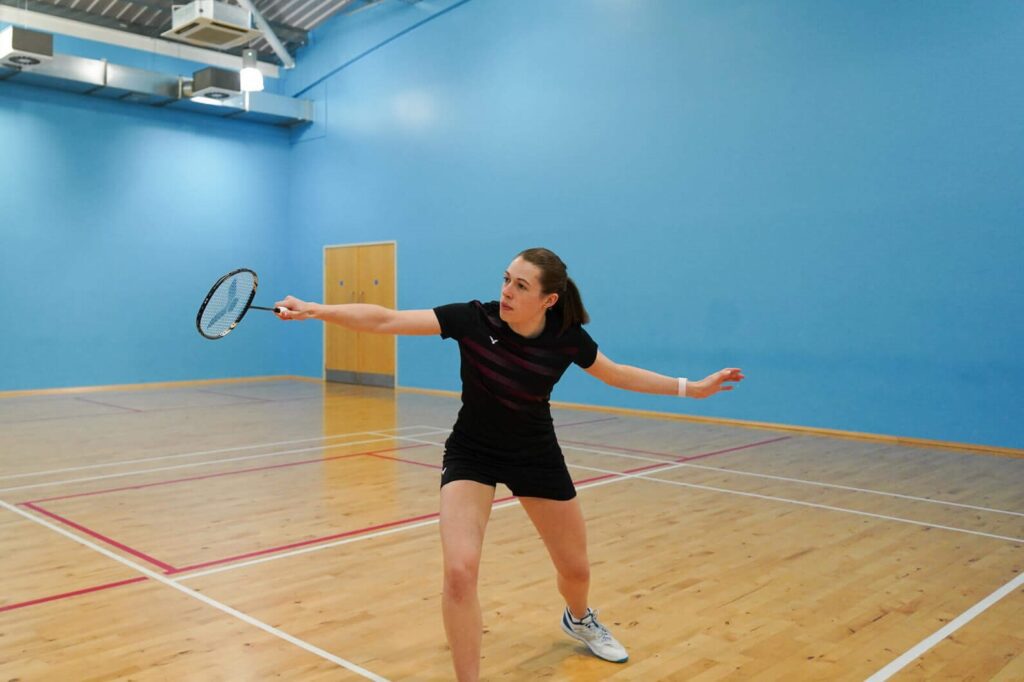
The importance of this mistake is hugely underrated – so lets briefly discuss why you’re going wrong with your lifting. Firstly, most intermediate players lift way too much. 

The quantity of lifts is then often made much worse by the quality of the lifts…

Players often lift too short, or to the middle where their opponents don’t have to move at all, which instantly puts you under more pressure. 

To fix this mistake:

  • Try not to lift as much! Use your net shots, or pushes into the mid-court. There’s often more space than you think.
  • If you do have to lift, or if you think that is the best tactic against your opponents, the one piece of advice that will improve your lifting quality is to have a loose grip. This enables you to use your fingers and thumb which gives you more control and power.

If you want to learn more about lifting in badminton, you can do so here, or learn more about advanced lifting in badminton here!

backhand lift shot in badminton

Mistake #4 - Being Tense

This impacts many areas of your game which is why it’s very important to fix! For example:

  • If you’re tense at the net or mid-court then you’re likely to be holding your grip tightly which reduces your ability to change between grips and have control of your shots.
  • If you’re tense in the rear-court you won’t be able to generate a fast racket head speed, which hugely limits your ability to create power in your smashes!
  • If you’re tense in your mind, then you won’t be able to think clearly and make good decisions during the rally.
  • If you’re tense in your feet, then you won’t move as quickly, smoothly or efficiently. 

To fix this mistake:

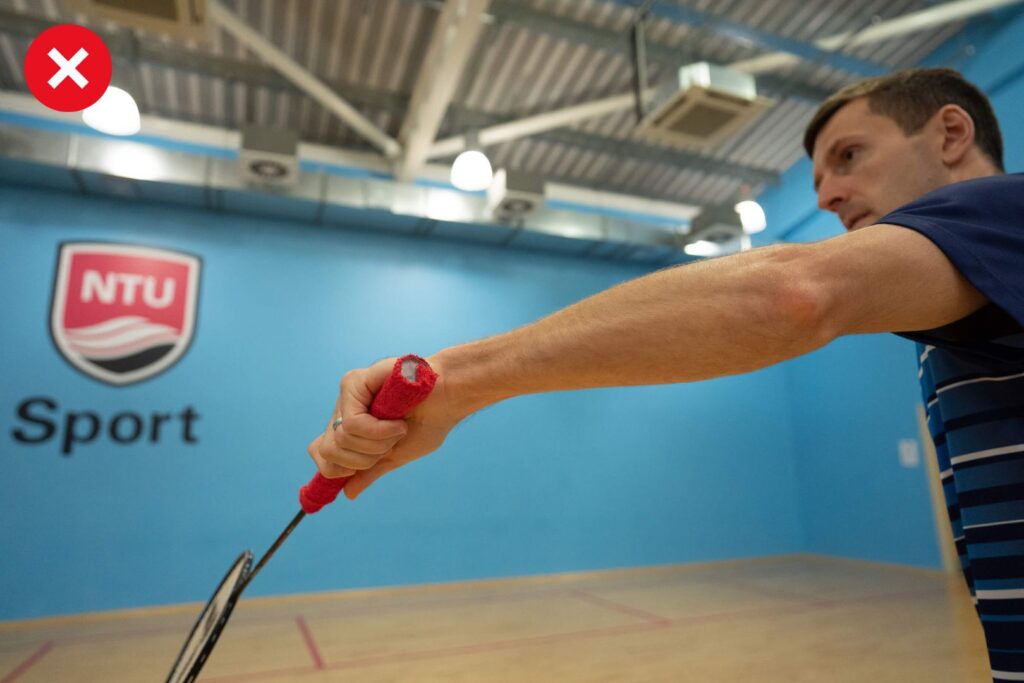
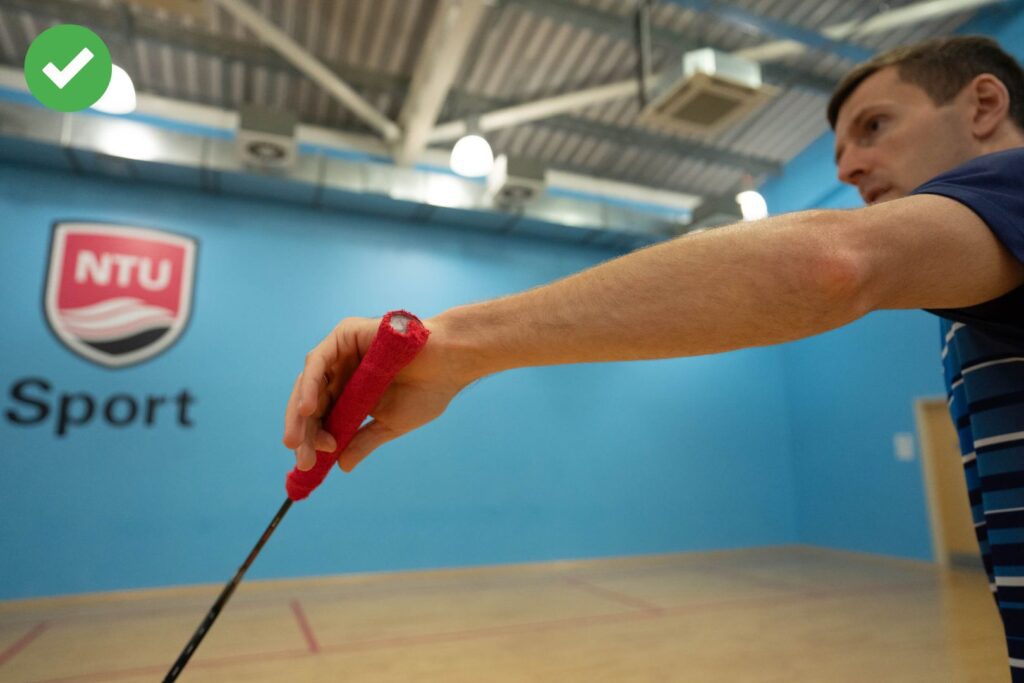
  • We’d always recommend trying to focus on fixing how you hold your racket. As we said in our changing grips video here, you should have a gap between your racket and the palm of your hand whilst you’re moving to the next shot.
  • If you don’t have this gap, you’re holding the racket too tightly and won’t be able to generate as much control and power!
Incorrect: Tense grip, no gap
Correct: Relaxed grip, with gap

From our experience, we found that just thinking to relax our hand, or sometimes shoulders, helps us to relax more in other areas such as in our mind!

Mistake #5 - Having the wrong Racket Position

We often see a lot of players waiting with their rackets nearly touching the ground, and you might not think this is you but if you record yourself playing you might realise it actually is! 

You shouldn’t do this because:

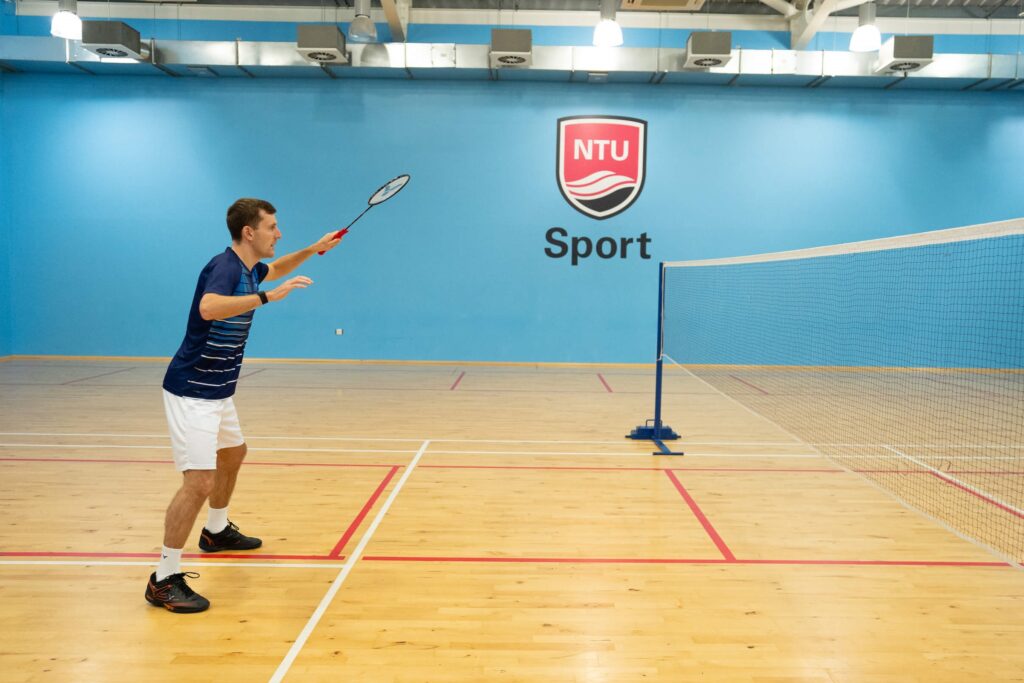
  • From a low down position it takes more time to get your racket to the shuttle, resulting in you taking it later and playing a worse quality shot.
  • When your opponent is playing their shot from below the height of the net, you need to get your elbow up and racket in line with the net. This is because it’s impossible to play a downwards shot from below the height of the net, so you should take advantage of this and take the shuttle as early as possible!

There are however, specific situations where it’s maybe not as beneficial to have your racket up this high, which you can read about here.

Learn More

We hope that you’ve learned something new to implement into your game to help take you from an intermediate-level to an advanced-level badminton player! 

If you want to watch the full YouTube below for more visual explanations of everything we’ve discussed in this article, check that out below.

Or if you want to watch us analyse our subscribers matches and give them some feedback, you can click here next!